


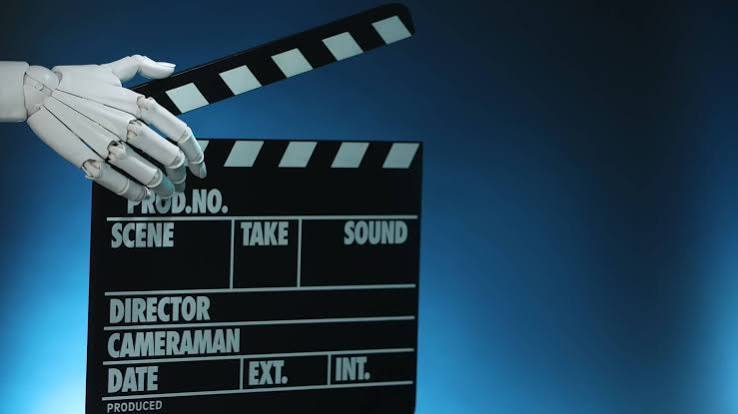
When talking about artificial intelligence applied to cinema, the collective imagination often tends to focus on the most particular and spectacular aspects, such as digital characters, computer-generated worlds, or increasingly realistic visual effects. It therefore seems easy to imagine a future in which films could be entirely created by a machine.
However, artificial intelligence does not aim to replace directors, screenwriters, actors, or visual effects artists; rather, its most concrete impact concerns those dynamics that viewers do not see: the organization, planning, and management of the processes that allow a film to reach the big screen.
The work behind every film is, in fact, a very long process that begins before filming and continues even after the final shot. It is precisely in these phases, often invisible to the audience, that artificial intelligence is increasingly finding applications.
One of the questions that can therefore be asked is not whether artificial intelligence can create films instead of human beings, but rather how this technology is changing the way people create films.
A film, normally, does not appear suddenly, but is the result of a long process of planning and development, without which it would be impossible to begin production. The pre-production phase, in fact, includes several essential steps, such as screenplay analysis, location selection, storyboard creation, and the definition of camera shots.
An analysis published by McKinsey on the future of artificial intelligence in the film and television industry highlights the potential of AI in the design phase. These tools can support the creation of previsualizations, be used for screenplay analysis, and facilitate production planning.
Technology therefore allows filmmakers to explore more possibilities in a shorter amount of time, but this does not mean that the algorithm decides how a story should be told. All decisions remain in the hands of directors and the professionals involved.
A director can therefore have the opportunity to visualize different versions of a scene, quickly modify certain aspects, and communicate more effectively with the crew.
An especially interesting aspect of the relationship between cinema and artificial intelligence concerns the concept of creativity itself. It could mistakenly be assumed that using an algorithm means reducing the human role; however, many professionals in the industry consider artificial intelligence a supporting tool trough which greater experimentation becomes possible.
Adobe, for example, reports some cases in which filmmakers have used artificial intelligence tools during the creative phase of a film project. This does not mean that AI has written the film, created the story, or made autonomous decisions: it has been used as a visual support tool.
The central point highlighted by Adobe is that AI can function as a kind of creative laboratory: an environment where different solutions can be quickly tested before choosing the one that best fits the story that the creator wants to tell.
It could therefore be said that technology creates new opportunities, but that the story, its meaning, and its development come from the experience, creativity, and sensitivity of the person who creates it.
If the pre-production phase concerns the development of the visual idea, post-production represents the moment in which all the recorded material is transformed into the final film.
The work, in fact, does not end with the completion of filming, but thousands of hours of footage must be selected, organized, and edited. These activities are accompanied by audio synchronization, editing, colour and lighting correction, the creation of visual effects, and the adaptation of dialogues for distribution in other countries.
It is precisely in some of these technical and repetitive activities that artificial intelligence is finding concrete applications.
According to McKinsey, artificial intelligence-based tools can be used to organize large amounts of audiovisual material, automatically recognize elements present in images, support some editing-related activities, assist international distribution processes, and facilitate the search for specific scenes.
An example concerns content localization: television series and films are now distributed worldwide and require translations, subtitles, and linguistic adaptations. Artificial intelligence could speed up some stages of these processes, although human supervision remains essential to preserve the meaning, tone, and other important aspects of the original content.
It can therefore be reaffirmed that AI represents a valuable support tool, but it cannot replace human beings, meaning the professionals working in the industry. Rather, it allows them to reduce the time spent on more mechanical tasks, which can be carried out by technological tools under human supervision, leaving more space for the more complex and creative aspects of their work.

The same principle can also be observed in the field of visual effects, one of the areas that has contributed most to the transformation of contemporary cinema.
When thinking about special effects, one might mistakenly imagine that artificial intelligence is capable of automatically creating images and digital environments. In reality, its main role is to support VFX artists, helping them make certain technical stages of the production process more efficient.
Creating a scene with visual effects requires numerous steps, from removing unwanted elements from images to integrating digital environments, and even modifying computer-generated characters.
In several of these operations, artificial intelligence tools can help analyse images, speed up certain tasks, and identify specific elements in a shorter amount of time compared to before these tools were introduced.
Despite this, human contribution remains essential. The choice of how to create a scene, how to represent it, what atmosphere to build, or which details to emphasize depends on the ability, experience, and sensitivity of the professionals involved.
In conclusion, it can be said that artificial intelligence tools can help a director visualize a scene, a film editor manage thousands of files, and a visual effects artist optimize their work, making some cinematic processes faster and more efficient.
However, these tools cannot replace professionals in the industry. Their main role is to provide support throughout the different stages of film production, allowing human beings to focus more on aspects that require creativity, experience, and interpretative skills.
Artificial intelligence, therefore, does not represent a replacement for human creativity, but rather a technology that can support those working in the film industry, changing the way audiovisual works are designed, produced, and distributed.
The real transformation brought by AI does not concern the possibility of a machine creating a film completely autonomously, but rather the way professionals can use these tools to expand their creative possibilities and make certain work processes more efficient.
Cinema remains, in fact, a form of expression deeply connected to the human ability to tell stories, communicate emotions, and give meaning to images. Technology can contribute to the creation of a work, but the vision and sensitivity of the person who creates it continue to represent the central element of the filmmaking process.
Author: Ms Maria Lagani, psychology graduate- Master’s student. Research Team for JUMP staff (Italy)
Source:
Adobe (2026). Sundance Dispatch: Expanding Creative Expression in Filmmaking with Generative AI. Adobe Blog.
McKinsey & Company (2025). What AI could mean for film and TV production and the industry’s future. McKinsey & Company.