School is a fundamental environment because it is at the heart of knowledge and personal development. It is not only a place where students acquire knowledge, but also a setting in which they develop skills, interpersonal abilities, and critical thinking that will accompany them not only throughout their school years but throughout their lives.
The education system is organized into different educational pathways and curricula. Although there are subjects common to all students, each type of school is characterized by specific disciplines that reflect its educational objectives. For example, the classical high school places particular emphasis on Ancient Greek and Latin, while the scientific high school offers a stronger focus on scientific subjects and foreign languages. Despite these differences, all educational pathways share the same goal: providing students with the knowledge and skills needed to understand reality, face life’s challenges with awareness, and develop their full potential.
Every student is unique. They differ in the way they think, understand, and apply knowledge, as well as in their abilities, learning styles, and learning pace. Within this context, artificial intelligence (AI) could play an important role. Today, numerous studies are exploring how teaching can become more personalized, and AI has emerged as a promising tool to support learning processes.
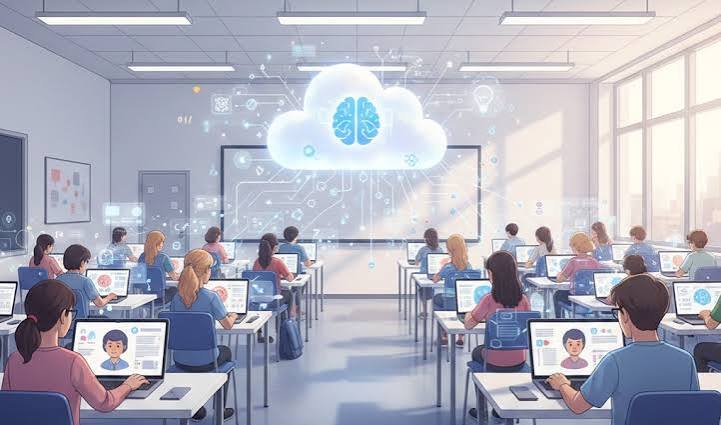
When AI in education is discussed, people often think of recent generative AI tools, such as chatbots capable of answering questions or generating written content. However, one of the most extensively studied applications is represented by Intelligent Tutoring Systems (ITS). These systems are designed to provide students with support that resembles, in some respects, the guidance offered by a personal tutor.
The underlying idea is inspired by the work of an experienced teacher who carefully observes students, identifies their difficulties, recognizes recurring mistakes, and adapts teaching strategies accordingly. Intelligent Tutoring Systems attempt to reproduce some of these functions through data analysis.
ITS collect information about students’ learning processes, including correct and incorrect answers, topics that present greater difficulties, the time spent completing exercises, and learning progress over time. Based on these data, the system can recommend personalized learning activities, provide additional explanations, or adjust the difficulty of exercises according to the learner’s needs. The objective is not to replace teachers, but rather to provide personalized support that would be difficult to guarantee in large classrooms.
In recent years, researchers have increasingly investigated whether these systems can effectively improve learning outcomes. One important source is a systematic review published in 2025 in npj Science of Learning, a peer-reviewed journal belonging to the Nature Portfolio. The review examined 28 experimental studies on the use of Intelligent Tutoring Systems in schools, involving approximately 4,597 students.
The findings suggest that ITS can positively influence learning outcomes, particularly because they provide immediate feedback, personalized learning pathways, exercises tailored to students’ skill levels, and opportunities for independent practice.
However, the researchers also emphasize that these findings should be interpreted with caution. The effectiveness of Intelligent Tutoring Systems depends on several factors, including the educational context, the quality of the system, the subject being taught, and the way the technology is integrated into classroom instruction. Therefore, current evidence does not demonstrate that AI is inherently superior to traditional teaching methods. Instead, it suggests that when appropriately designed and carefully implemented alongside conventional instruction, AI can become a valuable educational support tool.
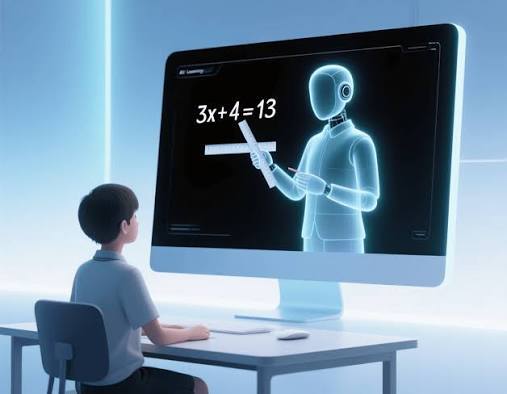
One of the educational areas in which Intelligent Tutoring Systems have been most extensively developed is mathematics. Systems such as Cognitive Tutor, later evolved into platforms such as MATHia by Carnegie Learning, have been specifically designed to guide students through mathematical problem-solving by analyzing the reasoning process rather than simply evaluating the final answer.
Despite these promising findings, scientific research also highlights important limitations. First, learning is not solely a cognitive process that can be measured through exercises. It also involves motivation, interpersonal relationships, personal development, and social interaction. While an algorithm may detect a student’s mistake, it is far less capable of determining whether that mistake results from a lack of knowledge, anxiety, low motivation, or personal difficulties.
Another important issue concerns data protection. AI systems operate by collecting and analyzing information about students, making privacy, transparency, and data security essential, particularly when minors are involved.
Finally, there is the risk of excessive reliance on technology, which may reduce students’ autonomy. The educational objective is not simply to produce correct answers, but also to help students learn how to reason, analyze problems, and develop critical thinking skills.
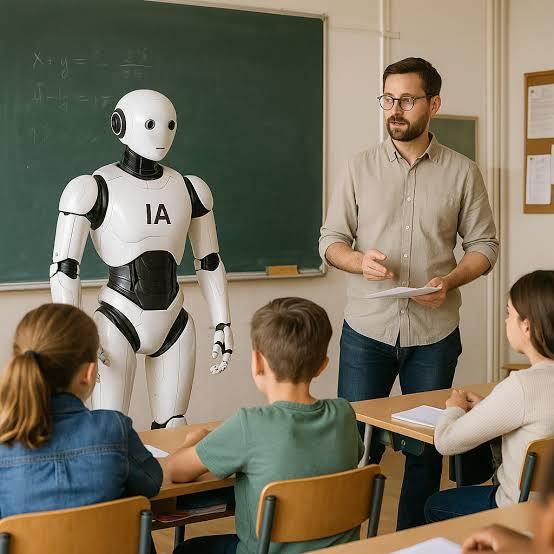
Artificial intelligence therefore represents one of the most significant technological innovations shaping the future of education because it offers the possibility of responding to individual differences among learners. Research on Intelligent Tutoring Systems suggests that these technologies can improve certain aspects of learning by providing personalized educational pathways. Nevertheless, the fundamental principle remains that schools should not be replaced by machines.
Instead, the future lies in collaboration between education and technology. Teachers will continue to play their central role as educators, mentors, and guides, while AI can provide additional tools to support teaching and learning. The ultimate goal is not to create schools governed by algorithms, but rather schools in which teachers and technological tools work together to build more effective, inclusive, and personalized learning experiences.
Author: Ms Maria Lagani, psychology graduate- Master’s student. Research Team for JUMP staff (Italy)
Source:
npj Science of Learning (Nature Portfolio), 2025 – revisione sistematica sugli Intelligent Tutoring Systems nell’educazione scolastica.
– Computers & Education – numerosi studi sugli adaptive learning systems e sulle tecnologie educative.
– UNESCO (2023), Guidance for Generative AI in Education and Research – linee guida sull’uso responsabile dell’intelligenza artificiale nell’educazione.
– Studi della Carnegie Mellon University sugli Intelligent Tutoring Systems e sul Cognitive Tutor.