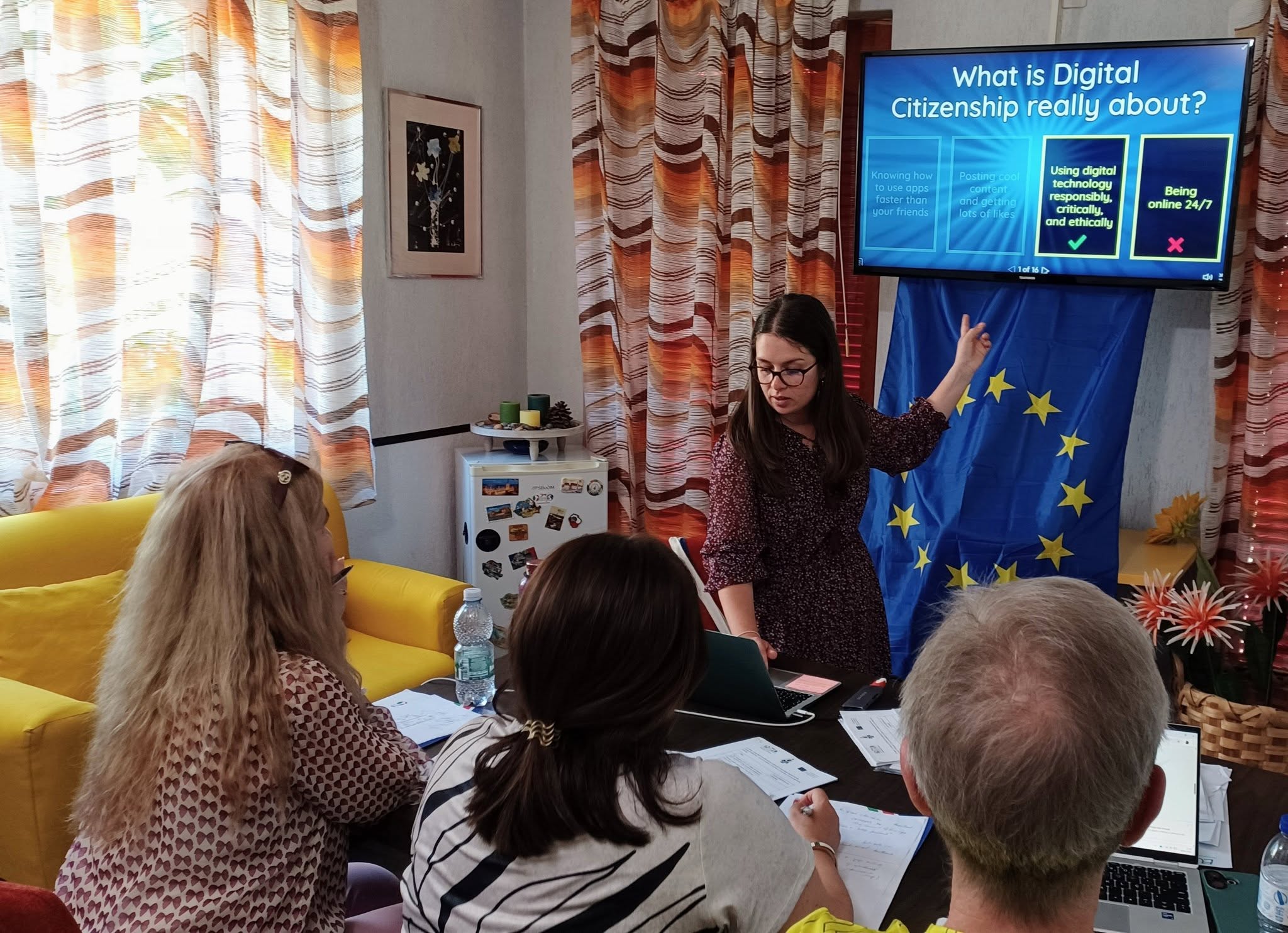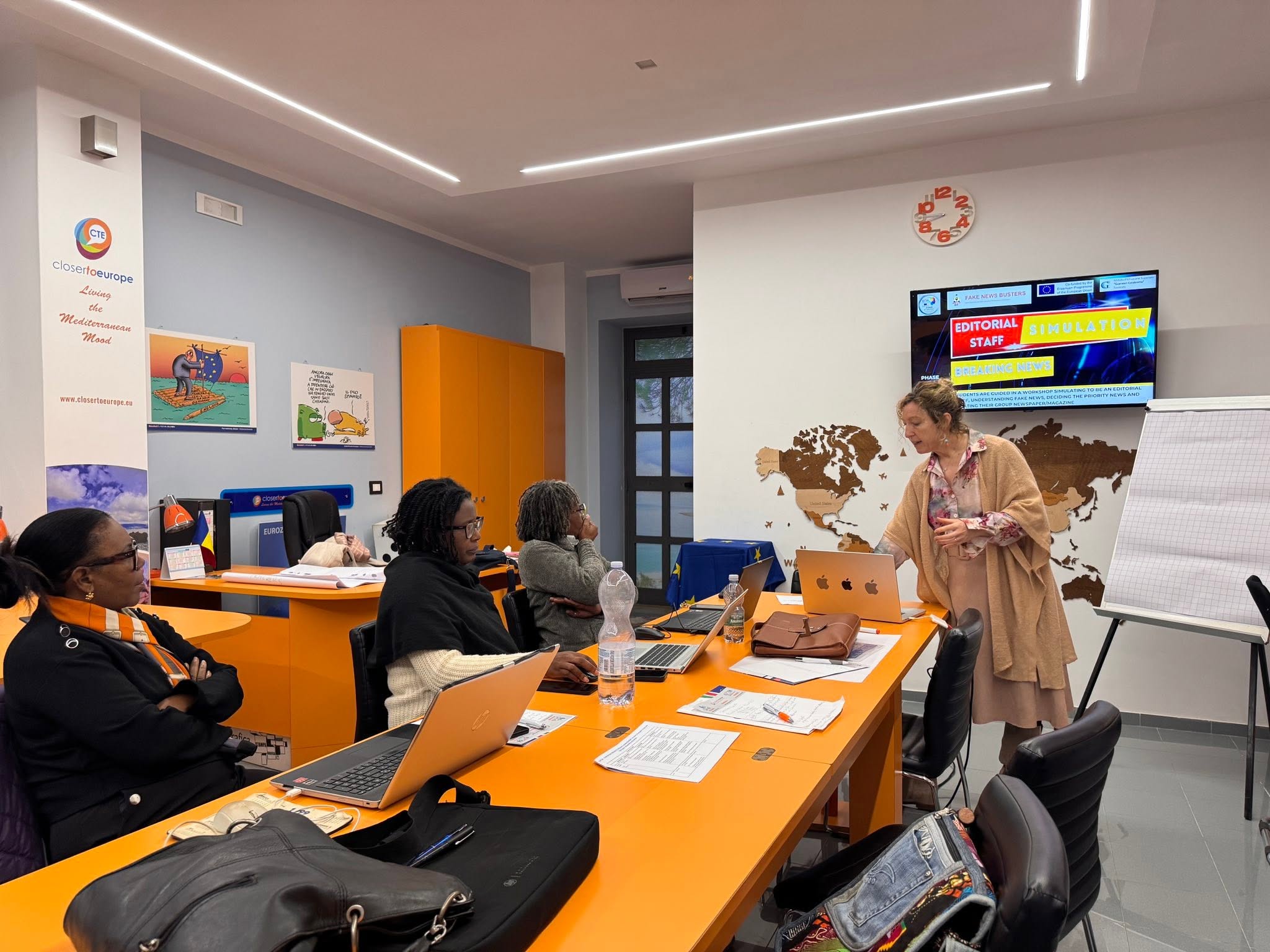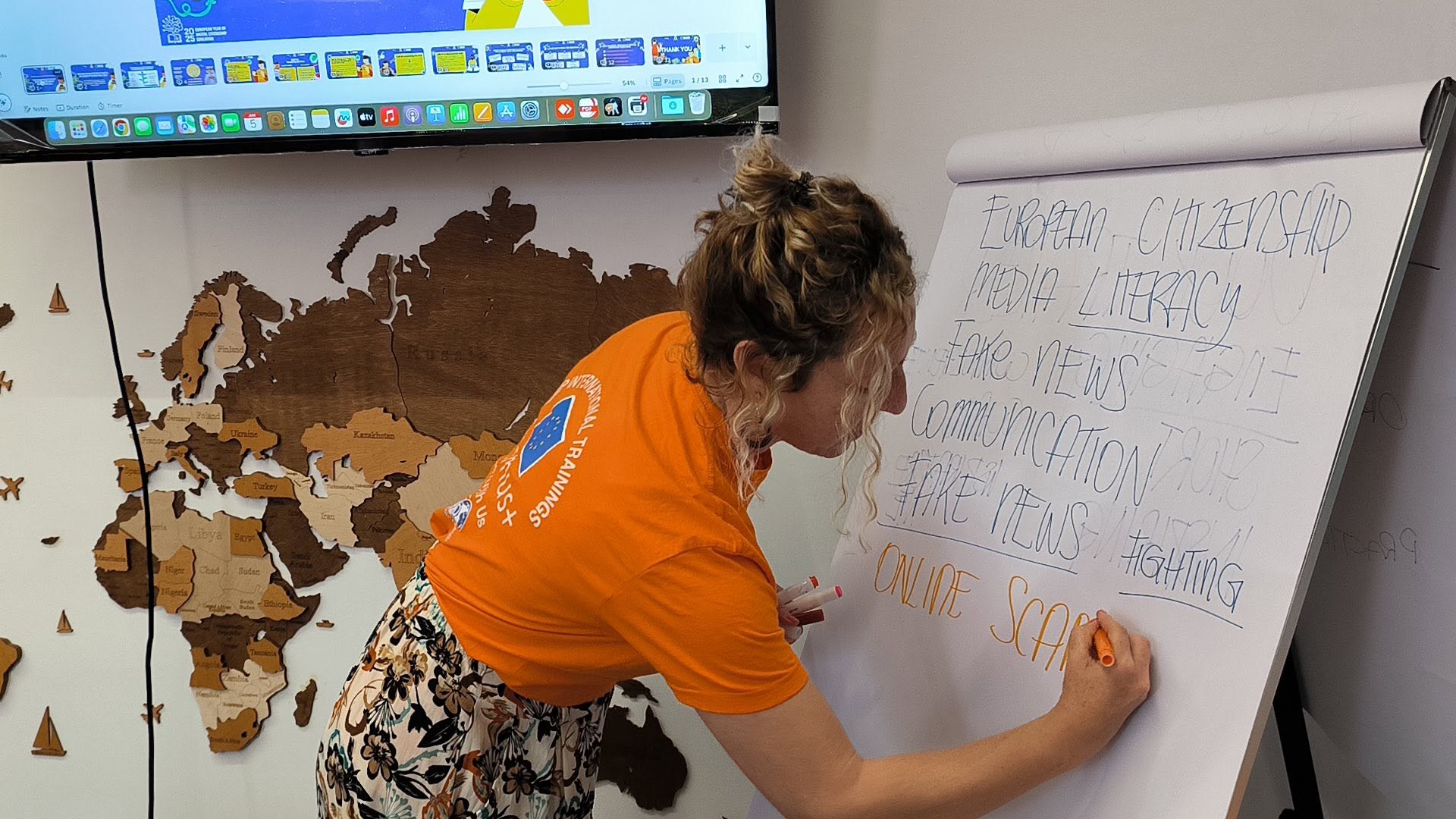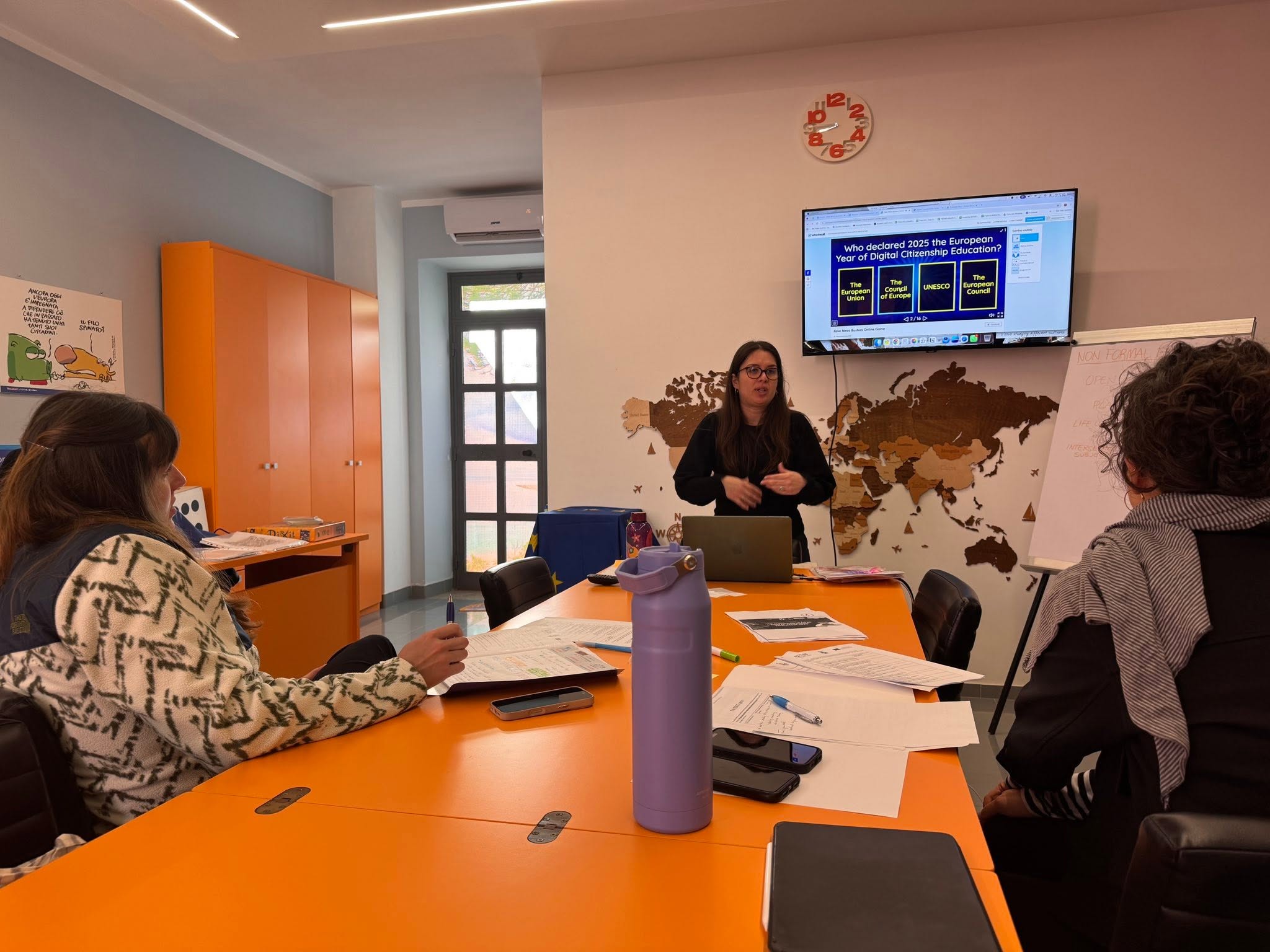
The web is full of traps, fake news, and propaganda. For this reason, knowing how to recognize what is real and understand how to protect yourself online is now essential. Young people constantly use social media to stay informed, but they often run the risk of believing manipulated or completely false news. Helping them develop true digital literacy means giving them the right tools to think for themselves, recognize reliable sources, and avoid sharing lies online.
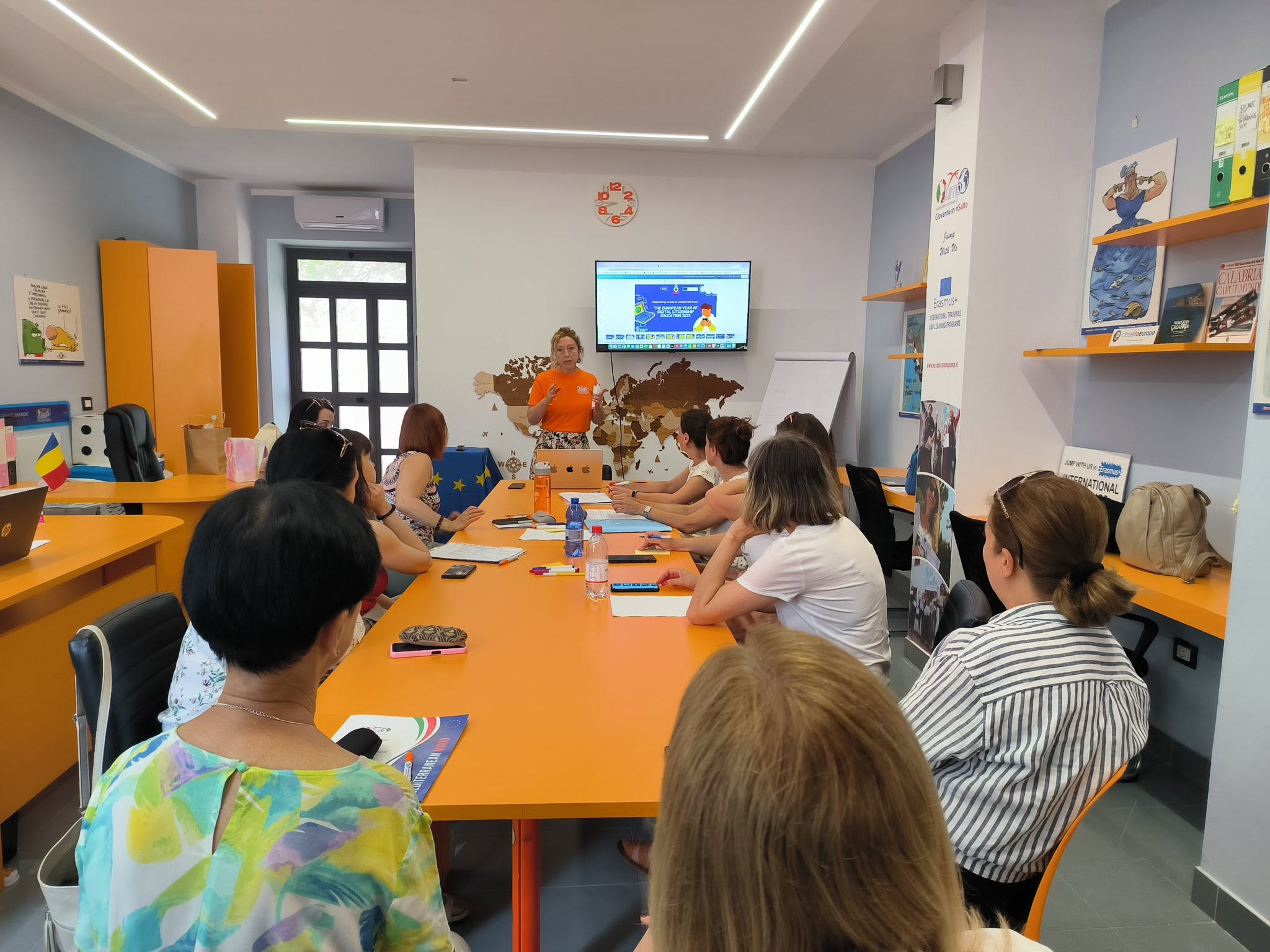
To address this issue, numerous European teachers have participated over time in JUMP’s training sessions in Soverato, specifically within the Global Education and Teaching Europe courses, as well as the Non-Formal Education modules. In these programs, theory is always combined with practice, offering a full overview of how to teach global citizenship and European values using interactive methods.
During these training courses, trainers shared the specific activities implemented within the “Fake News Busters” project – such as workshops and non-formal activities – with the participating teachers. These were presented as good practices, allowing teachers to observe, learn, and collect practical teaching methods to use in their own classrooms. As part of the project’s dissemination, JUMP has successfully implemented these activities not only in local schools but also with the international teachers who join their training courses:
- Active Listening activity: aimed at developing critical thinking and boosting immediate attention. It teaches students how to actively listen to information rather than just receiving it passively.
- Editorial Staff workshop: it focuses on fact-checking and media literacy. It helps students understand how media works, how to verify sources, and how to identify and reject false information.
- Online Game (Game-Based Learning) activity: it helps to increase digital awareness and test digital literacy. It evaluates the skills learned by using a modern, interactive language that appeals to young people.
Thanks to this integrated approach, which is now well established in the JUMP courses, the “Fake News Busters” project continues to spread throughout Europe. Teachers returning home bring with them practical, hands-on methods for engaging their students. Using non-formal education and teaching critical thinking remain the best ways to help the younger generation navigate the online world safely.
Author: Fabiola Forgione (JUMP staff)