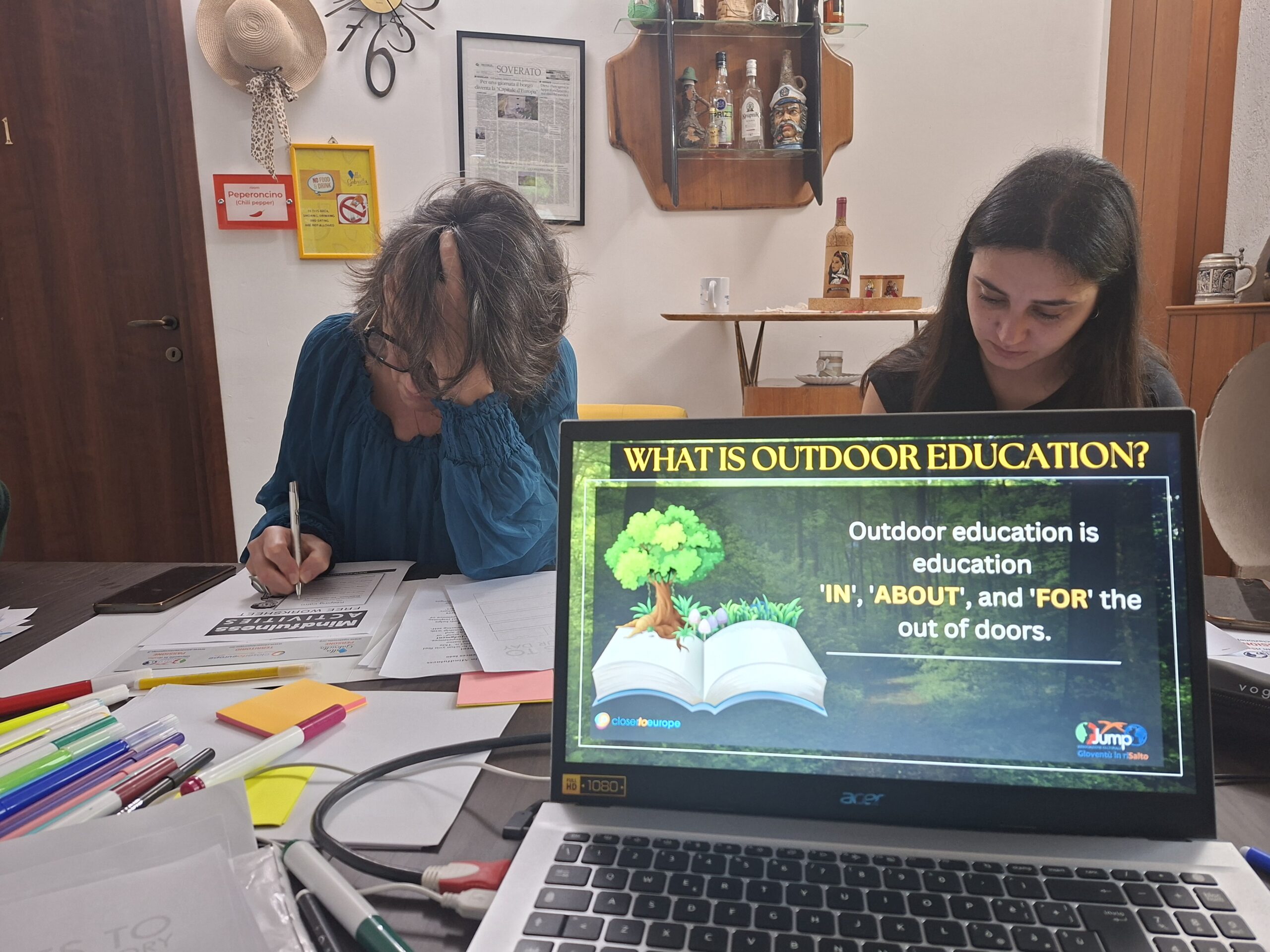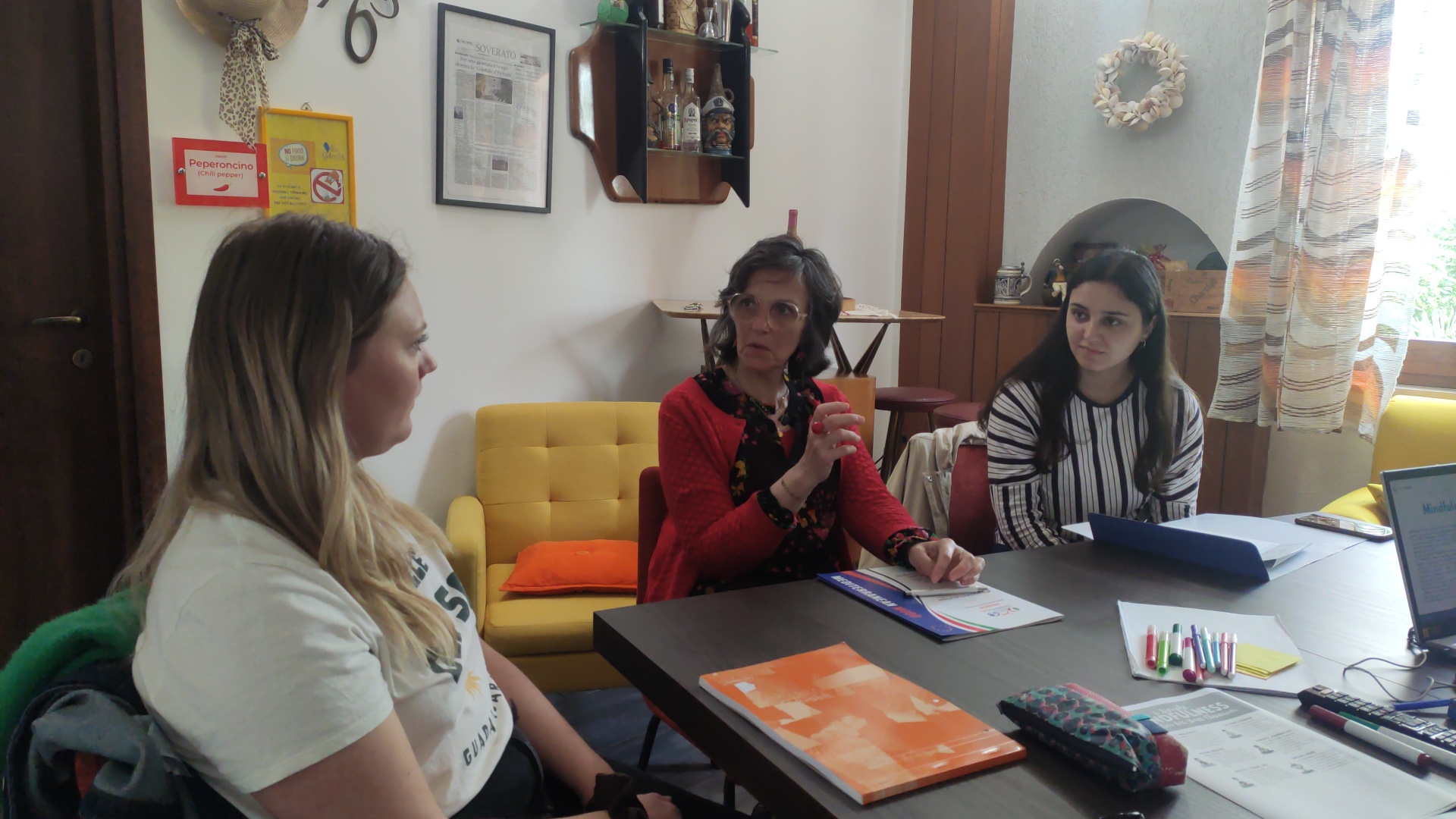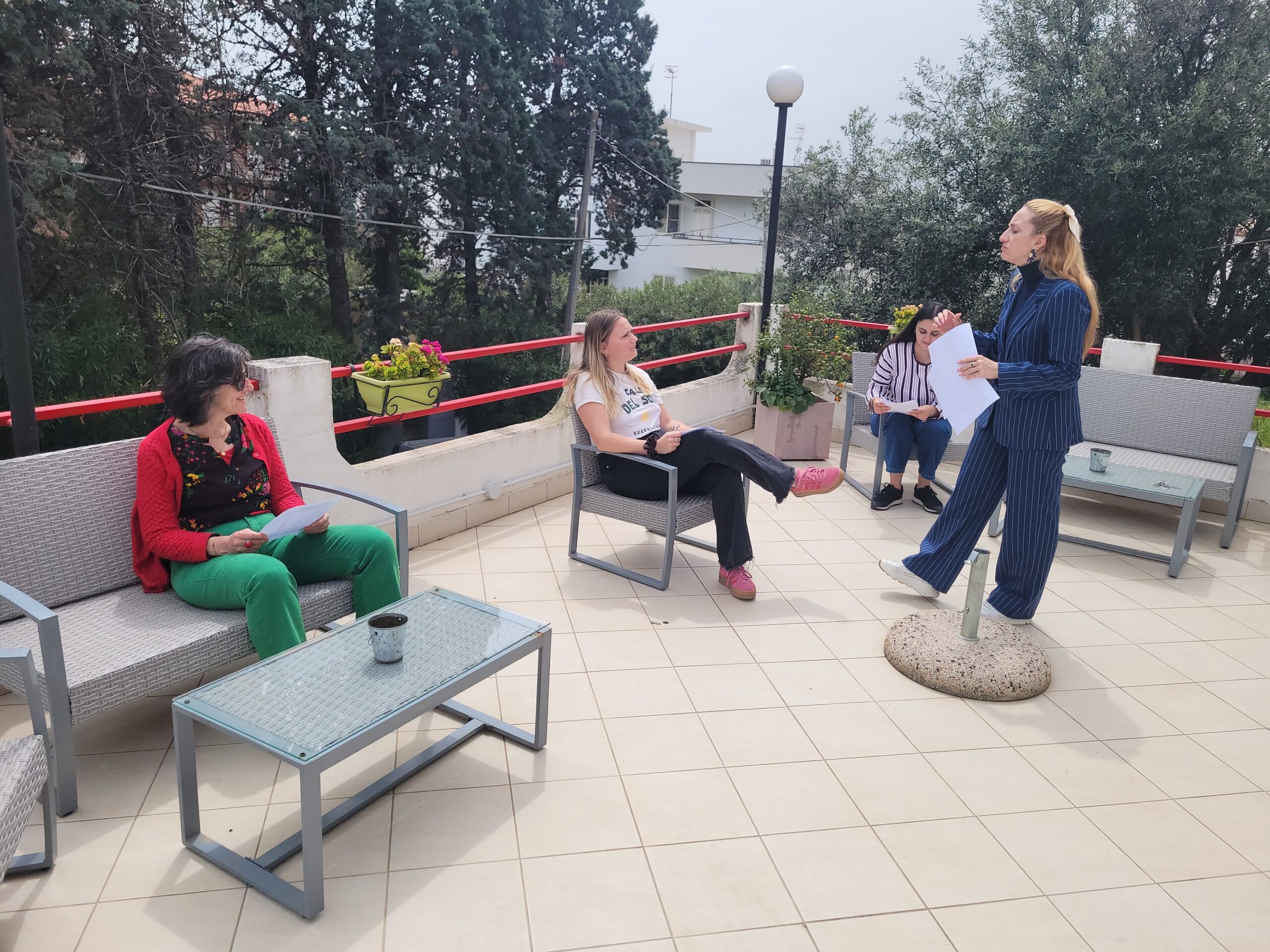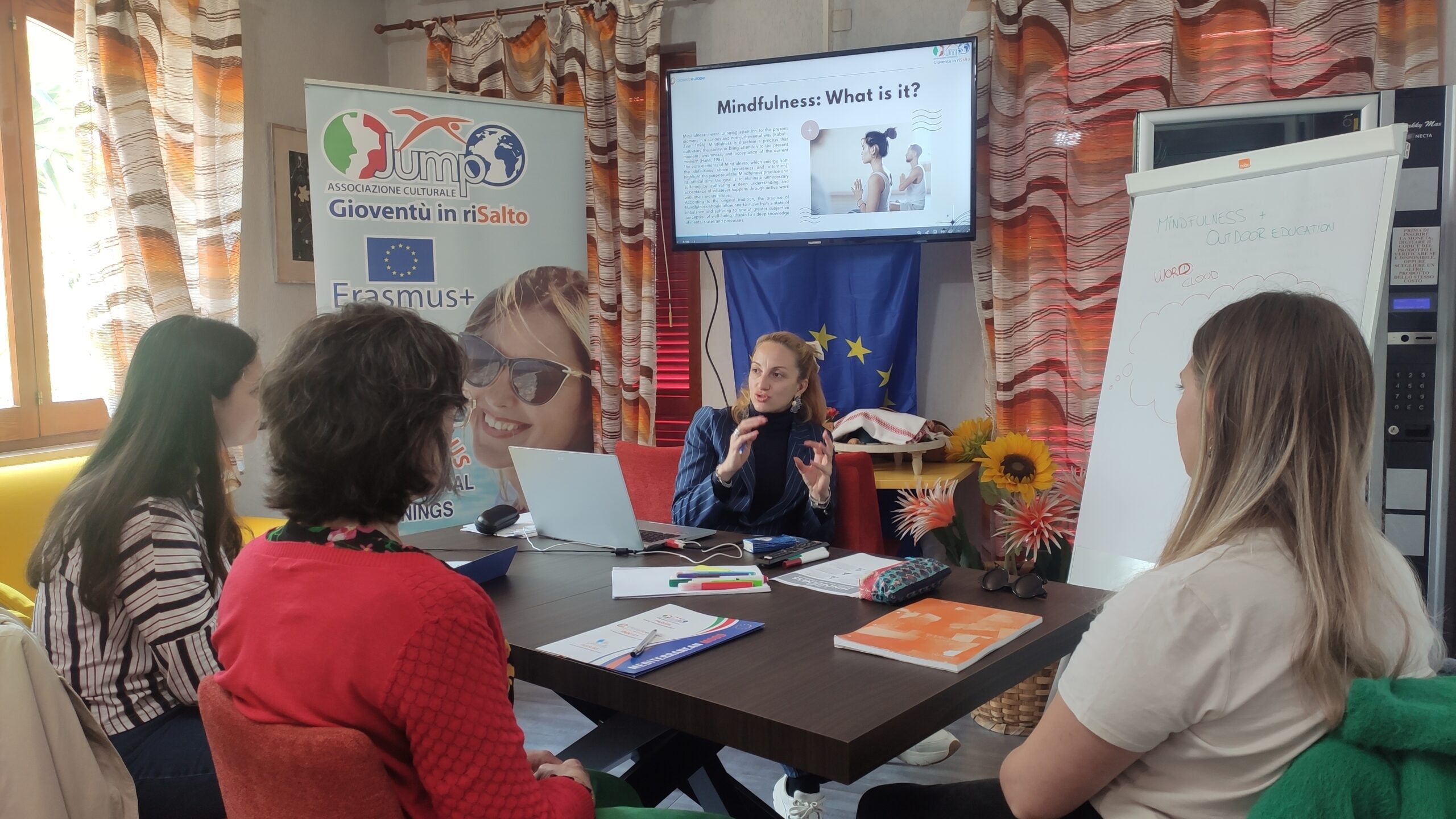
During the week from the 12th to the 18th of April 2026, JUMP hosted three European teachers: two from France, from a primary school, for a Mindfulness course, and one from Spain, from a secondary school, for an Outdoor Education programme. The encounter between these two educational approaches made it possible to build an integrated and highly coherent learning experience.
Mindfulness and Outdoor Education share a central goal: bringing attention back to the present moment, the body, and the environment, fostering more conscious, experiential, and meaningful learning. Mindfulness practice helps students and teachers develop attention, emotional regulation, and inner listening skills, while Outdoor Education expands this awareness outward through direct contact with nature, space, and concrete experience. Bringing these two approaches into dialogue strengthens their mutual value: nature becomes a privileged space to practice mindful presence, while mindfulness becomes a tool to observe and experience the environment in a deeper and more respectful way.
The so-called “open-air schools” originated at the end of the 19th century across Europe as a response to health issues, particularly to improve children’s wellbeing through fresh air, movement, and outdoor life. Today, however, this model takes on an even broader meaning: not only as a form of health prevention, but as a holistic approach to education. In an era characterized by digital hyperconnection, sedentary lifestyles, and increasing distance from nature, it is time to rediscover and “dust off” Outdoor Education-not as a marginal alternative to traditional schooling, but as an essential component of contemporary education aimed at forming more aware, balanced individuals capable of relating to themselves, others, and the natural world.
A particularly meaningful moment of the week took place on Wednesday afternoon during an activity involving a group of French students and four Estonian teachers, developed in two complementary phases. The first part was dedicated to the GoGoals board game, focused on the 17 Sustainable Development Goals to be achieved by 2030. Through the game, participants actively and collaboratively discussed key global issues such as sustainability, social equity, and environmental responsibility, while also strengthening transversal skills such as problem-solving and teamwork.
The second phase was a full immersion in nature through nature-based education activities designed to build trust, cooperation, and team building. Direct contact with the natural environment fostered listening, presence, and authentic connection among participants, going beyond traditional classroom learning.
The final day was dedicated to co-designing a lesson plan, enriched with role plays and outdoor activities. The educational proposals included practices such as yoga, meditation, and body scanning, tools that support acceptance of the present moment and body awareness.
Overall, the experience demonstrated how the combination of Mindfulness and Outdoor Education can become a powerful educational tool, integrating cognitive, emotional, and relational dimensions, and promoting truly experiential, cooperative, and transformative learning.
Author: Enza Procopio – JUMP Trainer